60
WiThiN
ThESE
WaLLS
I
t is surprising that it has taken so long for us to
rediscover the advantages – and charms – of walled
gardens. They fell into disuse as full-time gardeners
became hard to find but they offer so many solutions to
21st century gardeners that walled gardens are now
distinctly trendy.
Landscaped, the walled garden can be formal; where it is of
colourful herbaceous borders, the walled garden can be kept
for growing vegetables.
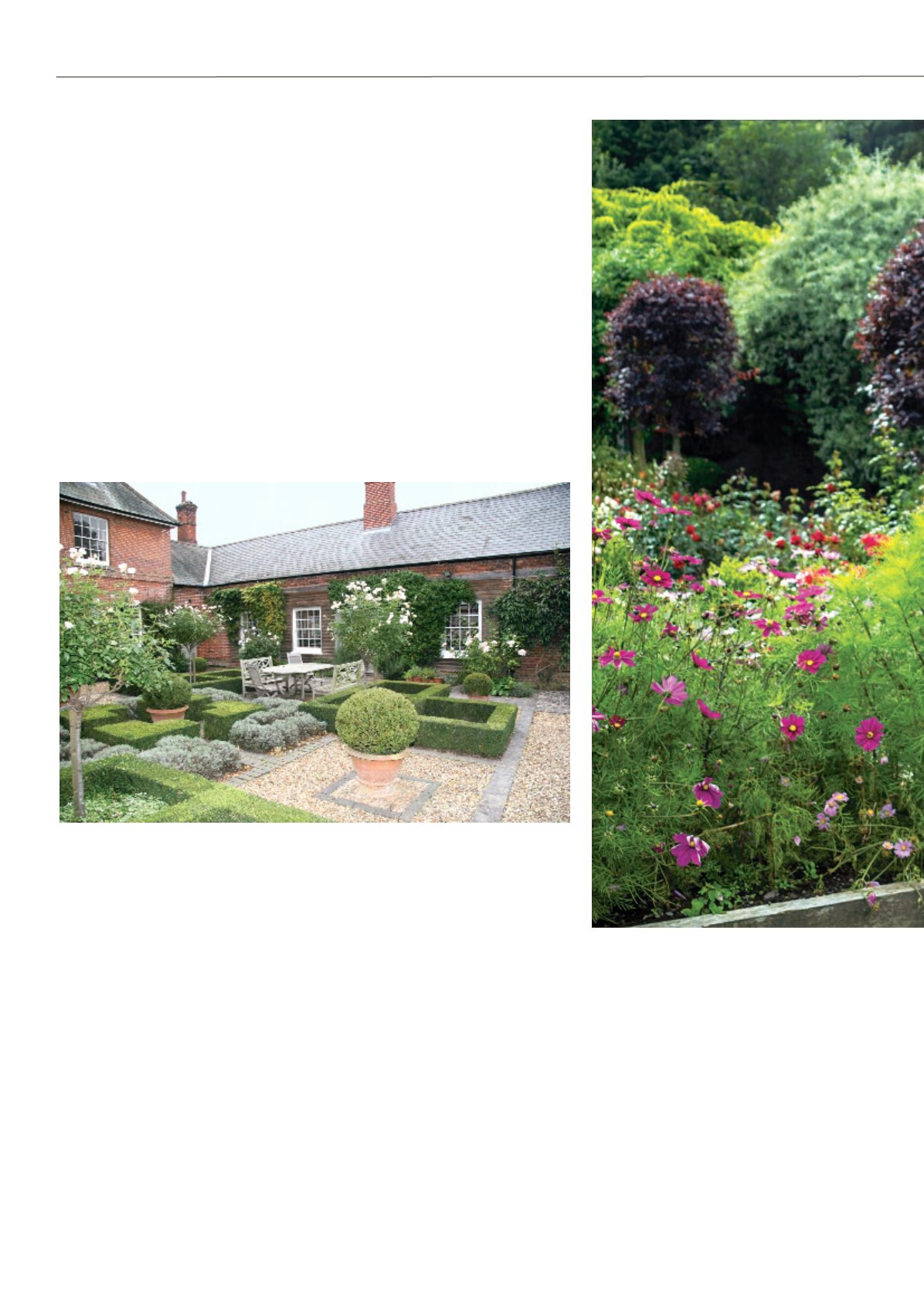
The gardens of West Suffolk show such variations. At Ousden
House, for example, the courtyard garden is small and formal,
the colour restricted mainly to white with clipped box hedges.
It is the ideal area for sitting out on summer days and contrasts
to the house’s eight-acres of lake and woodland, rose and
herbaceous borders.
An entire acre is walled around at Netherhall Manor which
fulfils another purpose – shelter. The owner here grows old-
fashioned flowers, which can be temperamental, so the high
walls round the whole property keep out the winds. They also
provide a fine framework for climbers and statues. There is
also a smaller walled garden within the greater.
At Columbine Hall, an old barn was demolished to make a
vegetable garden but, because this also leads to a barn
hosting weddings, the vegetables are grouped by colour and
chosen for their interesting forms. There are flowering
artichokes, brilliant-stemmed chard and elegant kale. The walls
are coveredwith old-fashioned climbing roses and clematis. It’s not
just a haven but a productive one.
If you want to see a traditional walled garden in all its flourishing
glory try Spencers at Great Yeldhamwhere an 18th century area has
been carved from a 100-acre estate. The herbaceous borders are truly
dazzling and include the azure delphinium ‘Lord Butler’ named
‘
The charms - and uses - of walled gardens are being
rediscovered and there are some fine examples in
West Suffolk and North Essex, says Leslie Geddes-Brown


