63
S
urely gardening has to be one of the
most satisfying of pastimes doesn’t it?
It requires relatively little effort, there
are obvious health benefits, and others
can share the experience. In the case of
vegetable growing, the results can also tantalise
the taste buds!
The other merits of ‘growing your own’ are
commonly known of course; the gardener is in
control of whether to be organic or not, what
chemicals to use or not, the freshness of the
produce and so on. So how easy is it to start
growing veggies? There used to be a saying that
vegetable growing was about ‘muck and magic’
but that really isn’t the case. It’s more about
understanding the requirements of what you’re
growing and giving the plants the environment
and conditions they need.
The other myth is that you need to have a
large garden before you can grow vegetables.
Even a small patio is capable of producing a
good amount of crops, particularly if it’s south
facing with a wall or fence. Containers need not
be just for pretty flowers, they can also provide
some mouth-watering produce. The image of
scruffy allotments is also outdated. Modern
vegetable gardening is also about making it look
good. Why not mix it up with Tumbling Toms
crunch factor
from baskets, Swiss Chard amongst bedding
plants and Lollo Rosso Lettuce in with the
Lobelia. The French did formal vegetable
gardening on a grand scale but mini versions
can easily be re-created in the form of
small parterres; geometric patterns of
paths and beds of squares and
triangles planted with different
varieties.
Easy vegetable gardening should
start with the easiest of varieties. In
early spring the windowsill can
provide just the spot for getting
things started. Lettuce and Peas can
be sown indoors for planting
outside later. Seed Potatoes in bags
or tubs (or for larger plots), and onions
achieve an almost 100% success rate when
planted outside. Plants which are more
difficult to start from seed, such as Beans
and Brassicas can be bought direct from the
garden centre and be planted straight
outside.
For the more adventurous, with careful
soil preparation and the removal of weeds,
direct outdoor seed sowing is very rewarding,
if a bit more hit and miss. The important
things to remember are to only grow
what you and your family are likely
to eat, sow little and often to avoid
any gluts, and be prepared to attend
to your small plot regularly to keep
weeds at bay and to apply water
during dry spells.
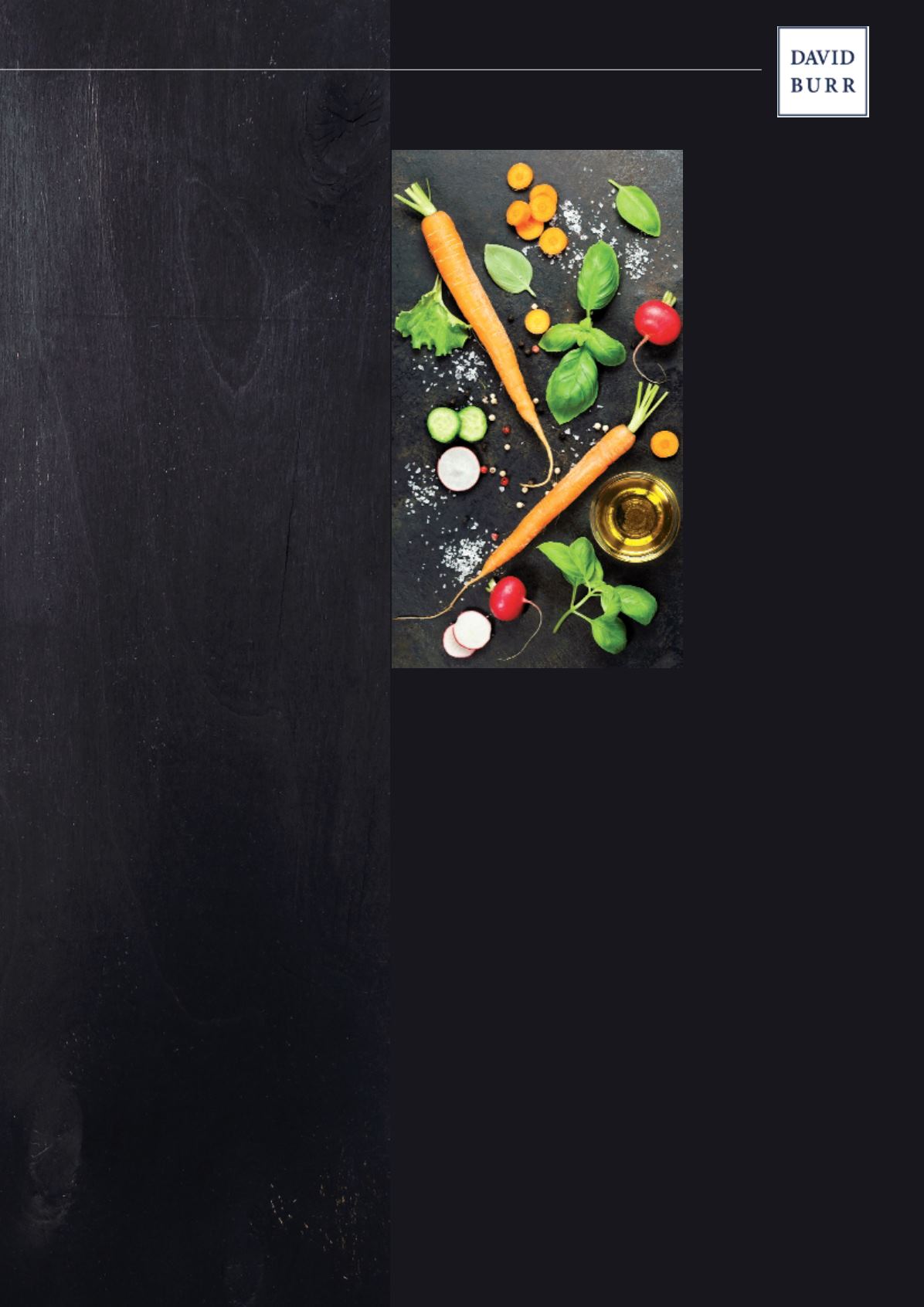
All root crops are best sown direct
into the soil, with radish, beetroot
and carrots being the most
successful. Try to keep a diary of
when and what you sow and when
you start to harvest, as well as your successes
and failures (there will be some; it’s nature
after all). This will then become your own
guidebook for future years.
So if you haven’t tried vegetable growing
before, why not give it a try? Your taste buds
will thank you for it!
Ian Shilling on the pleasures of vegetable growing
To the non-gardener,
composts can seem
puzzling. Why are there so
many to choose from?
Here’s a quick guide to the
main types to help make
sure your plants will thrive;
Multi-Purpose Compost
Good for most seed-sowing
and established plants, but
not all, so be sure to know if
your plants or seeds are fussy
or not. These are normally
peat or peat-substitute based,
brown and fluffy with a limited
amount of fertiliser.
Ericaceous Compost
Some plants
(Rhododendrons, Camellias,
Pieris, etc.) will not survive in
Suffolk’s ground water which
is alkaline. They need an
acidic soil, and Ericaceous
compost is acidic, but will
only stay that way providing
you don’t add our local tap
water. So to have these
plants in Suffolk (with a few
local exceptions), it’s best to
plant into containers using
Ericaceous compost.
John Innes Composts
The John Innes Institute
developed four ‘recipes’ for
the four stages of plant
growth from germination to
maturity. Hence four different
composts; ‘Seed’ for sowing,
No.1 for young plants, No.2
for later growth and bedding
plants, and No.3 for shrubs.
John Innes composts are
soil-based so they are
heavier which is good for
containers as they help to
hold them down in windy
conditions.
Also, all composts will run
out of their fertiliser sooner or
later so be prepared to add
this during the growing
season or incorporate ‘slow
release’ granules when
planting up.
Did you know?
Scotts Levington composts
are so named because they
were developed at the former
Fisons Research Centre at
Levington in Suffolk.
Composts explained
“The
important
things to
remember
are to only
grow what
you and your
family are
likely to eat.”


